
Featured Posts

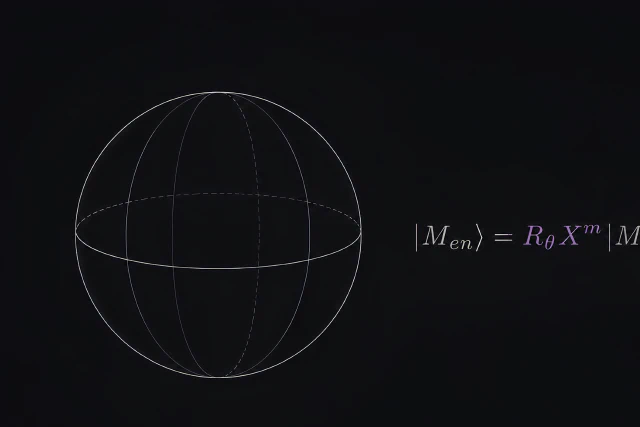
Cryptanalysis of a Quantum Public Key Encryption Scheme
I explain my cryptanalysis of a public key encryption scheme that uses a four-states quantum public key to encrypt a qubit message. This scheme was described in Zhixin Liu et al 2022 Phys. Scr. 97 045102
Read more
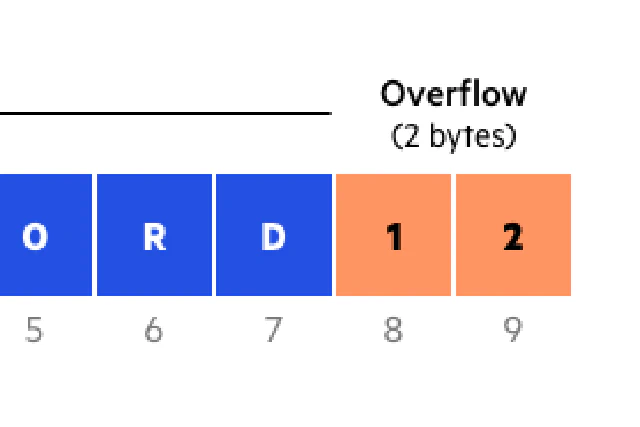
Privilege Escalation via Buffer Overflow: Case Study on Narnia
In this article, I go over my journey from understanding memory layouts to achieving privilege escalation through a buffer overflow exploit, using OverTheWire Narnia as a case study.
Read moreRecent Posts

Cryptanalysis of a Quantum Public Key Encryption Scheme
I explain my cryptanalysis of a public key encryption scheme that uses a four-states quantum public key to encrypt a qubit message. This scheme was described in Zhixin Liu et al 2022 Phys. Scr. 97 045102
Read more
Privilege Escalation via Buffer Overflow: Case Study on Narnia
In this article, I go over my journey from understanding memory layouts to achieving privilege escalation through a buffer overflow exploit, using OverTheWire Narnia as a case study.
Read more
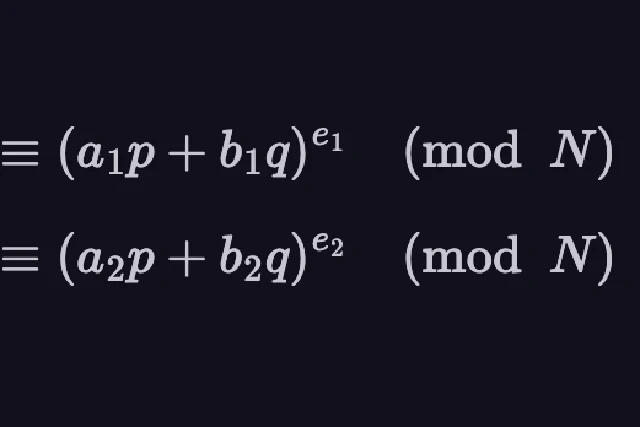
Understanding Modular Binomials in Cryptography
In this article, I go over a toy model of modular binomials and try to demonstrate how algebraic structure or patterns in a cryptographic system can inherently break secrecy.
Read more
The Cake is a Matrix: A CitadelCTF 2025 Challenge
In this writeup I’ll go through my thought process and solution for the challenge “The Cake is a Matrix,” which was a part of the CitadelCTF 2025 by Cryptonite. This challenge was created by goosbo.
Read more
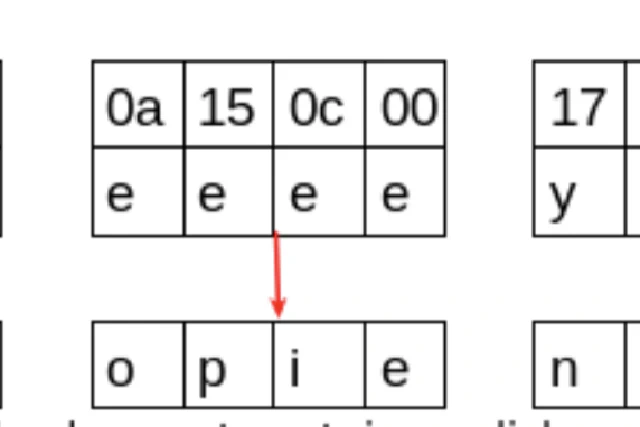
Frequency Analysis on Repeating-key XOR
Repeating-key XOR is a simple, yet good exercise to learn how structure betrays secrecy. I’ll walk through the basic idea behind the encryption and how it can be broken: the intuition, the practical steps I thought of. I’ll also add a mention to a simple cipher I built months back, the Bit Flip Cipher and why the same weakness applies.
Read more
Bit Flip Cipher: My First Attempt at Making a Cipher
A few months back, I found myself with an idea: what if I tried making my own cipher, just for fun? I hadn’t studied cryptography at all at that point, but I wanted to see how far I could go. That’s how Bit Flip Cipher came into existence.
Read more
Fibonacci LFSR: How it works and How to Attack it
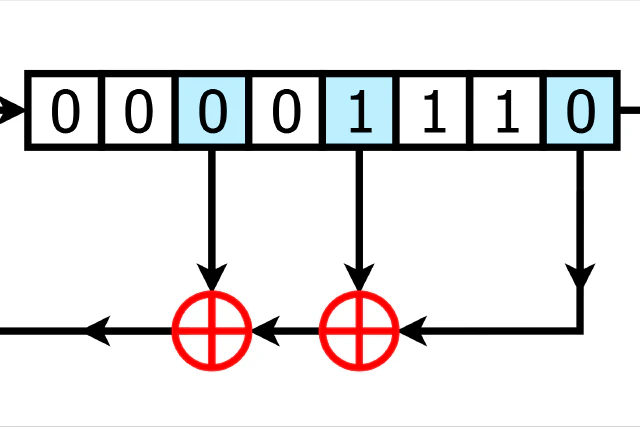
The Fibonacci Linear Feedback Shift Register is a classic example of a simple pseudo-random generator. It is often introduced in the study of stream ciphers and cryptanalysis because, while it can produce long pseudo-random sequences, its linearity also makes it vulnerable to attacks.
Read more